SpaceX's Starship reaches orbit for the first time and deploys 26 satellites
The world's most powerful rocket hit orbit on its 14th test flight, but engine problems cut the planned 10-hour mission to about three hours.
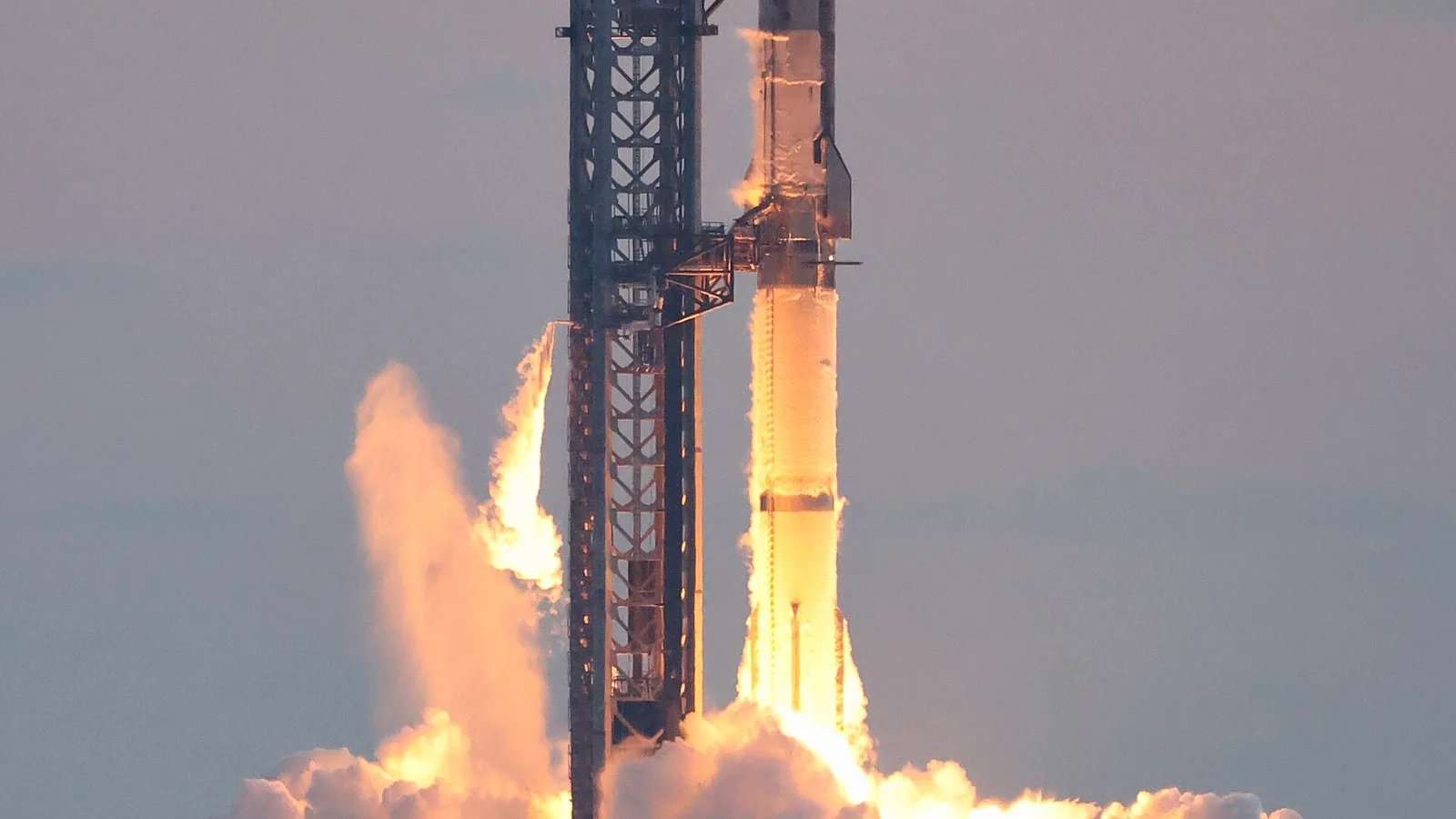
SpaceX's Starship reached orbit for the first time on Monday and released 26 new Starlink satellites before splashing down in the Pacific.
SpaceX's Starship reached orbit for the first time on Monday, releasing 26 next-generation Starlink satellites before the giant spacecraft splashed down in the Pacific Ocean north of Hawaii.
The rocket lifted off at 8:49 a.m. ET from the company's Starbase site in Texas. It was the 14th test flight of the system and the first to reach orbit after 13 suborbital flights.
The milestone matters far beyond SpaceX. Starship is the vehicle NASA is counting on to land astronauts on the Moon under its Artemis program, and SpaceX needs it to work at scale to build out its satellite network.
"Starship is orbital," SpaceX mission control announced.
The full stack stands 407 feet (124 meters) tall, making it the largest and most powerful rocket ever built. It flew with Super Heavy booster B21 and Ship 41, neither of which was meant to be recovered.
All 26 Starlink V3 satellites were deployed. "All 26 Starlink V3 operational satellites deployed and operating nominally," SpaceX CEO Elon Musk said.
The flight was not flawless. The booster lost one engine on the way up and another during its return burn, and the ship lost an engine during its climb. A SpaceX spokesperson initially said the team would "not commit to orbit," a call that was later reversed, Reuters reported.
Mission managers cut the planned 10-hour, six-orbit flight to about three hours. The booster made a controlled splashdown in the Gulf, and the ship came down north of Hawaii at 11:57 a.m. ET, then tipped over and burst into flames, as expected.
Reports gave slightly different figures for the orbit. AP put it at about 170 miles (275 kilometers) high.
NASA Administrator Jared Isaacman praised the flight as a "gorgeous launch, getting Ship to orbit and managing every step in a safe, responsible, and especially inspirational way."
SpaceX has spent more than $15 billion developing Starship, Reuters reported.
Big challenges remain for the Moon mission. To land astronauts, SpaceX will need as many as 15 tanker flights to refuel the lander in orbit, and many industry observers doubt a tested lander will be ready by 2028, Spaceflight Now reported.
It is not yet clear why the engines shut down, whether the Federal Aviation Administration will require an investigation, or how well the ship's heat shield held up on the way back. Three of the satellites carried cameras to record it.
SpaceX may try to catch the ship with its launch tower on the next flight, depending on what engineers learn from this one. No date has been set.