Two galaxies, one line of sight: volunteers help reveal the dust between them
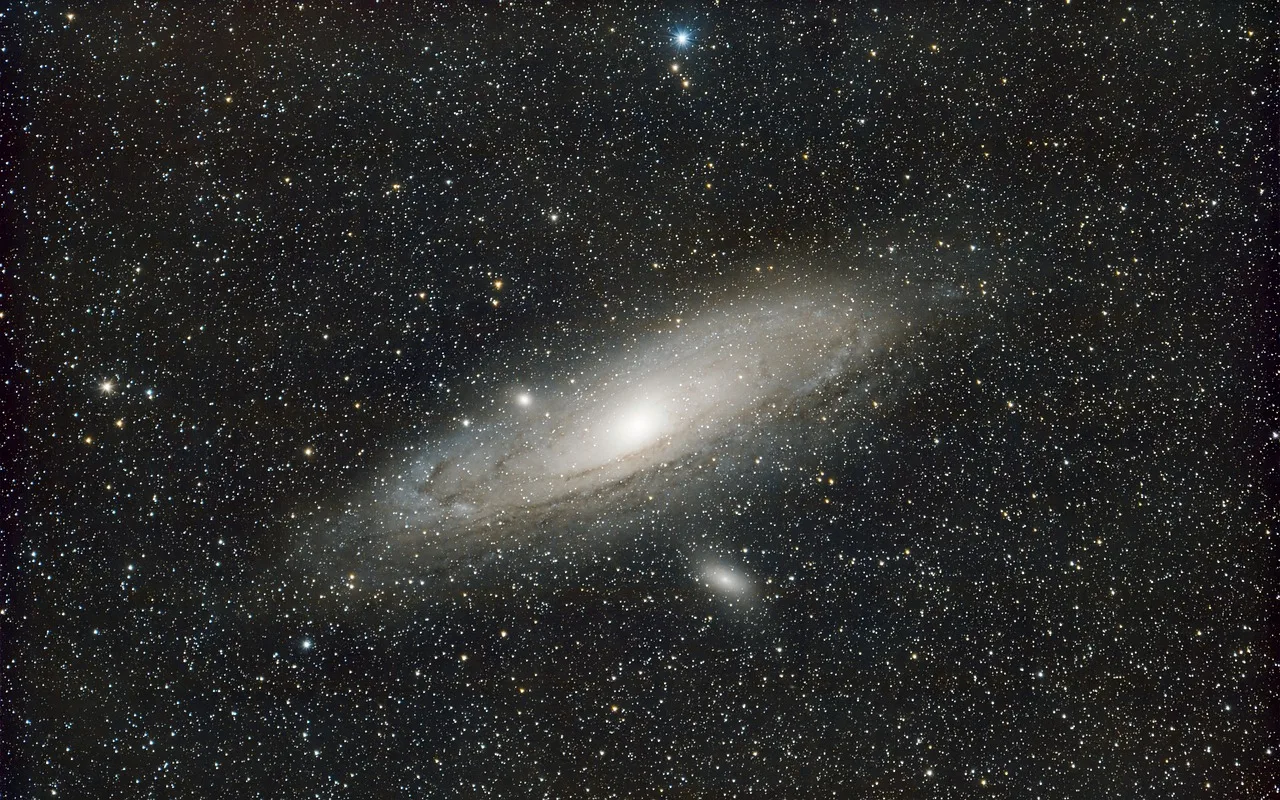
Chance alignments can reveal how dust changes the light reaching Earth.
Astronomers are asking volunteers to identify galaxies that appear to overlap, turning a chance alignment on the sky into a tool for measuring cosmic dust.
NASA highlighted Overlap Zoo on September 30, inviting people without specialist training to examine images and classify promising pairs. The project builds on candidates already identified by Galaxy Zoo participants, rather than asking volunteers to search the entire sky from scratch.
The useful arrangement places one galaxy in front of another along Earth's line of sight. The galaxies can be separated by millions of light-years even when their images seem to touch. An overlap therefore does not establish that the systems are colliding.
The background galaxy supplies the light. As that light passes through the foreground galaxy, dust absorbs and scatters part of it. By comparing the obscured region with unobscured parts of the galaxies, researchers can estimate how strongly the dust alters the view.
The project team says foreground spiral galaxies paired with background elliptical galaxies are particularly valuable. The spiral provides dust structure, while the more smoothly distributed background light can make it easier to distinguish missing light from variations inherent in the source.
Dust is not merely an obstacle to producing a clearer picture. The team's research explanation notes that it changes estimates of galaxy properties, including star formation. Understanding how much light is blocked helps astronomers interpret the light that does reach their instruments.
There is already a research foundation for the volunteer workflow. An Overlap Zoo Beta paper published earlier in 2026 described a catalog of roughly 800 occulting pairs assembled from the DESI Legacy Survey. It used candidates from Galaxy Zoo DECaLS and images from the survey's tenth data release.
The beta study tested whether non-specialists could classify the pairs at the depth and image quality available in that survey. Its existence separates the new recruitment appeal from a claim that the method itself was invented in September.
A related Galaxy Zoo DESI project has produced morphology measurements for millions of galaxies. Its published description reports coverage expanding from about 5,000 to 19,000 square degrees, illustrating why human classification projects need organized candidate selection rather than casual inspection of a handful of attractive images.
In Overlap Zoo, participants confirm possible alignments, classify visible features and mark galaxy outlines. Their work helps identify systems suitable for subsequent analysis; a volunteer classification alone is not a completed measurement of a galaxy's dust.
The opportunity is a practical one: repeated, structured observations from many people can help turn a large image collection into a focused scientific sample. The apparent coincidence of two galaxies sharing a patch of sky then becomes evidence about material that would otherwise hide in the foreground.