Webb studies the wreckage of collisions that can build rocky worlds
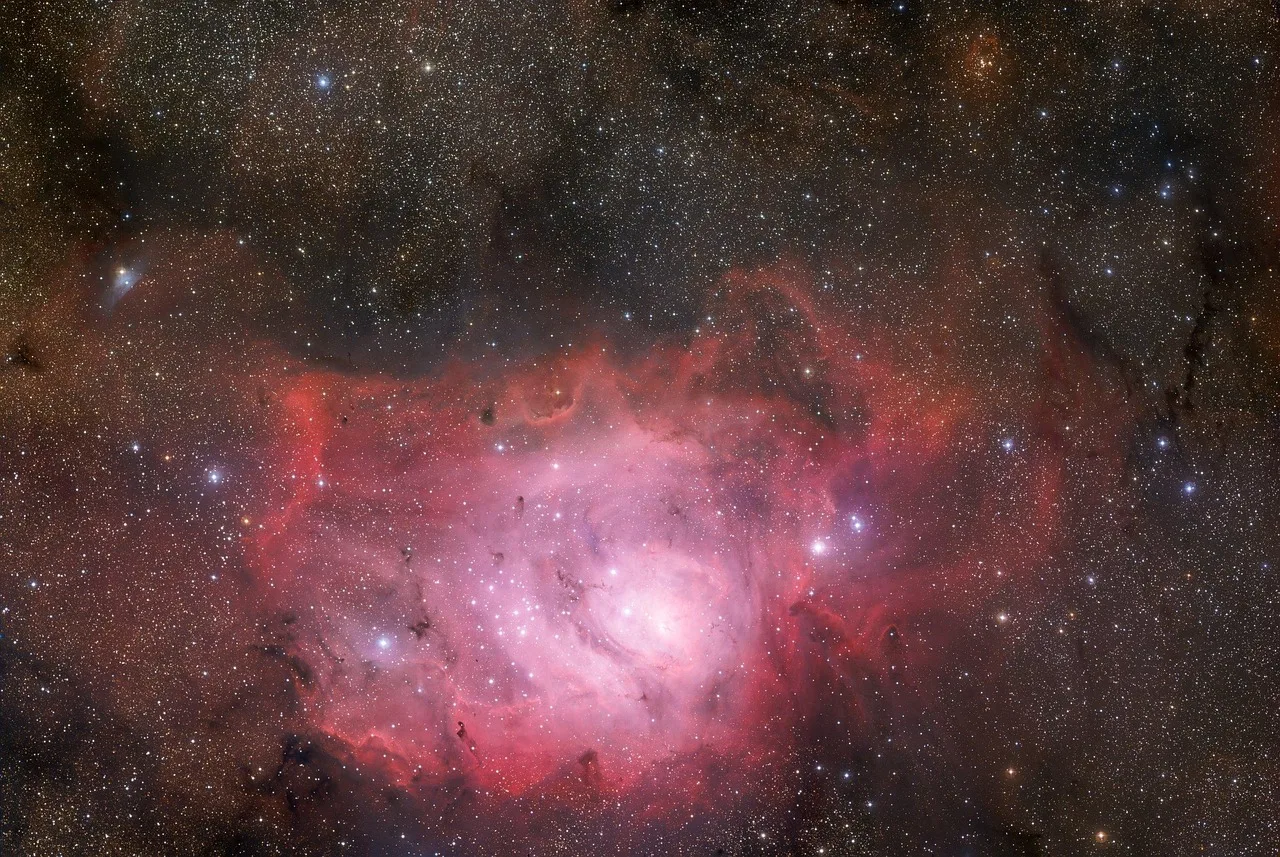
Astronomers compare 21 unusual debris systems to investigate how rocky worlds evolve.
Astronomers are examining the dusty wreckage around other stars to understand collisions powerful enough to build—or destroy—rocky worlds.
Research highlighted by NASA on October 1 combines James Webb Space Telescope observations with earlier Spitzer data from 21 extreme debris disks. The unusually warm, abundant dust in these systems gives scientists a way to investigate violent events involving objects too small and distant to observe directly.
The team was led by Kate Su of the Space Science Institute. NASA said the findings appeared in The Astrophysical Journal on October 1; a version of the research was already posted on arXiv in July. The October announcement therefore marks publication and public presentation, not the first appearance of the underlying work.
The paper identifies a distinctive combination of small dust grains, irregular infrared brightness and mineral composition. Many grains are smaller than a micrometer, and their chemistry indicates that material has been substantially altered by heat.
The researchers interpret these signatures as evidence of large collisions involving bodies on the scale of the Moon and Mars. Their analysis uses the debris as a record of physical conditions during an impact, rather than presenting a direct image of two planets striking each other.
NASA's account describes two broad groups: silica-rich and silica-poor disks. The difference may distinguish higher-energy impacts, in which substantial rock is vaporized, from less energetic encounters. Scientists hope that comparison can connect the aftermath of an impact with the age and dynamical state of the planetary system.
The work builds on earlier monitoring rather than a single new snapshot. A 2015 study led by Huan Meng and including Su used Spitzer observations to follow six extreme debris systems. Five showed significant changes on timescales shorter than a year, but their behavior differed: some brightened or faded over longer periods, and some showed possible repeating patterns.
A 2019 study of two systems, ID8 and P1121, extended that approach across five years of observations. It linked changes over weeks, months and years to the aftermath of large impacts and the subsequent evolution of the debris.
Together, those earlier studies explain why the new mineral measurements matter. Tracking brightness can show that a dusty environment is changing; spectroscopy adds information about what the dust contains. Combining the two provides a more detailed test of what kind of event produced it.
The broader question reaches back to the early solar system, where a giant impact is thought to have contributed to the Moon's formation. The new observations do not identify that ancient impactor. They offer comparisons elsewhere in the galaxy that can help scientists test whether their accounts of rocky-planet formation fit the evidence.